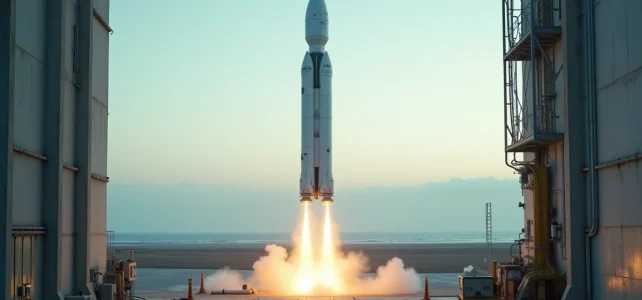
Sending a satellite into orbit is not just about building a spacecraft. It also requires a launcher capable of placing it there, a launch base, and a complete industrial supply chain. This capability remains rare: a handful of nations master the entire chain, from the design of the launcher to the injection into orbit.
Among the countries with access to orbit are Russia, the United States, France (via the European Space Agency and the Guiana Space Centre), China, Japan, India, Israel, Iran, North Korea, and South Korea. Europe, through the ESA, constitutes a special case: the Ariane launcher is an intergovernmental program, but it is indeed from French soil, in Kourou, that satellites take off.
Space launcher and ballistic missile: a blurred technical boundary
Why do some countries develop a space launcher when they do not have an ambitious scientific program? The answer lies in one word: duality between civil launcher and ballistic missile. Beyond a range of 300 km, a missile leaves the Earth’s atmosphere. A long-range intercontinental missile peaks well above the International Space Station, which orbits at about 400 km.
This technological proximity explains the international mistrust towards the space programs of Iran or North Korea. The launcher that places a satellite in low orbit relies on the same technical building blocks as a military vector. About 25 countries possess ballistic missiles, and a dozen of them have their own design capability.
The distinction between civil space program and military program is therefore largely political. A country that masters orbital insertion effectively demonstrates that it can project a payload thousands of kilometers away.

Military satellites: dependence on American private suppliers
Owning a satellite does not mean being able to launch it oneself. The vast majority of nations entrust this operation to an external provider. SpaceX, with its Falcon 9 launchers, dominates the commercial launch market. But this situation creates an imbalanced power dynamic.
Let’s take a concrete example. Sweden recently placed its first reconnaissance satellite into orbit via Planet, an American operator. This satellite collects sensitive data for Swedish defense, but both the launcher and the operator are under American jurisdiction.
Several risks arise from this configuration:
- The client country depends on the availability and goodwill of the supplier to schedule the launch, which can be problematic in case of diplomatic tensions.
- The data collected by the satellite transit through technical infrastructures controlled by the operator, potentially exposing classified information.
- In case of conflict or sanctions, access to the launch service can be suspended overnight, depriving the country of any capability to renew its constellation.
A country without its own launcher entrusts its space sovereignty to a third party. For civil observation or telecommunications satellites, the risk remains acceptable. For military satellites, the question becomes strategic.
The Starlink case and intelligence
The Starlink network illustrates another facet of the problem. Deployed by SpaceX, it provides satellite internet access in low orbit across dozens of countries. Guinea-Bissau recently authorized its deployment, joining a wave of rapid approvals in Africa since 2024.
Starlink offers valuable connectivity in underserved areas. But the network belongs to a private American company. The user country has no control over the orbital infrastructure or the data flows. In Iran, protesters have used Starlink to bypass internet shutdowns imposed by the regime, demonstrating both the utility and the geopolitical dimension of these networks.
Space club: how new entrants access orbit
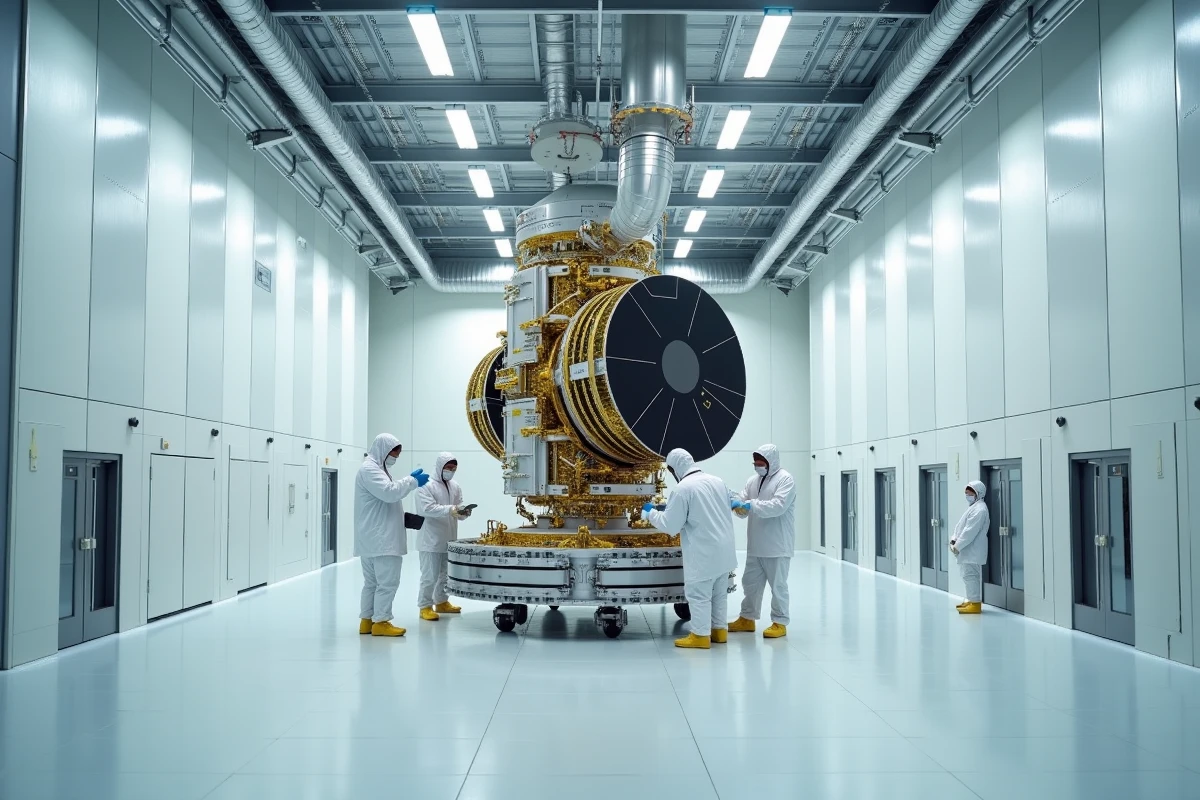
Joining the small group of satellite-launching countries requires decades of investment. South Korea is the latest country to achieve this, after several unsuccessful attempts. Each new entrant follows a similar path: first developing short-range missiles, then gradually extending the range, and finally converting to a civil space launcher.
India has followed this path with its PSLV program, which has become a reliable commercial launcher offering competitive rates. China has heavily invested in its space sector and is now testing reusable rockets, such as the Long March 12A. The race for launcher reusability is redefining the costs of access to orbit.
The role of the private sector in access to space
The landscape has changed over the past decade. In the United States, SpaceX, Blue Origin, and Rocket Lab operate alongside NASA. In Europe, several start-ups are developing micro-launchers. This privatization expands the launch offering, but it also concentrates power among a few private actors, primarily American.
For a country like France, having autonomous access through the Ariane program remains a pillar of sovereignty. Autonomous access to space conditions strategic independence in terms of intelligence, navigation, and telecommunications.
Earth orbit and space traffic: a saturation in progress
The number of active satellites in orbit has exploded in recent years, reaching over 13,000 in the latest count. Low orbit constellations, driven by Starlink and its competitors, represent the bulk of this growth.
This densification raises concrete questions:
- The risk of collision increases, making orbital traffic management comparable to air traffic management.
- Space debris generated by end-of-life satellites threatens all operators.
- Available radio frequencies for communicating with satellites are becoming scarce, creating regulatory competition between countries and operators.
Mastering orbital insertion is no longer enough: it is also necessary to manage deorbiting. Launching countries are working on end-of-life standards to limit the proliferation of debris, but no binding international framework yet exists.
Space is no longer reserved for the superpowers of the Cold War. But between countries that launch their own satellites and those that depend on a foreign operator, the sovereignty gap remains considerable. The next frontier will not be so much about accessing orbit as it will be about maintaining control over data and infrastructure there.