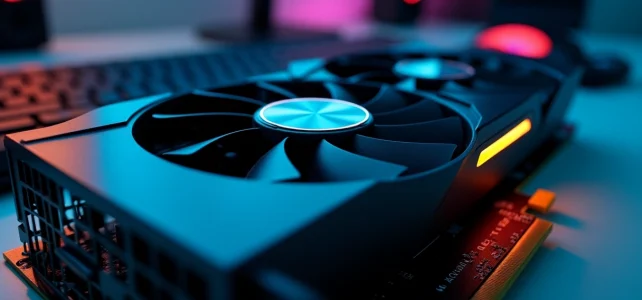
For those looking to get the most out of their gaming or graphic work experience, optimizing the graphics card becomes a necessity. Performance can be significantly improved by adjusting a few key settings.
Among the solutions, overclocking allows for increasing the card’s frequency for smoother rendering. Regularly updating drivers ensures maximum compatibility and efficiency. Ensuring proper cooling helps maintain the card at optimal temperatures, thus preventing overheating and prolonging the lifespan of the hardware.
See also : Planning Your Trip to Corsica: Key Elements to Consider
Essential settings to optimize your graphics card performance
To optimize your graphics card, it is necessary to focus on several essential settings. First, updating the graphics drivers is fundamental. New drivers can offer improved performance, especially for the latest generation games. Use tools like the Riva Tuner tool for fine-tuning your GPU, which allows for precise control over the card’s settings.
Adjusting graphic settings
It is possible to modify graphic settings directly from the games or through the Nvidia or AMD control panels. Here are some settings to consider:
See also : Planning Your Autumn Stay: Weather Conditions to Consider
- Resolution: Lowering the resolution can improve performance without sacrificing too much image quality.
- Anti-aliasing: Reducing or disabling anti-aliasing can free up resources for other tasks.
- Textures: Adjust the texture quality according to your graphics card’s capabilities.
- Ray tracing: Disable this feature for smoother performance if your card does not fully support it.
Using advanced technologies
Technologies like ray tracing, integrated into Nvidia GeForce and AMD Radeon cards, allow for ultra-realistic lighting effects. However, they can be resource-intensive. Cards like the NVidia GeForce RTX 4090 and the Radeon RX 7800 XT are equipped to handle these technologies effectively.
Optimizing the operating system
Windows 11 features a Game Mode designed to optimize the system for gaming. This mode disables non-essential background processes and allocates more resources to the current game.
Optimizing your graphics card requires careful attention to detail and an understanding of your hardware’s capabilities. Follow these tips to get the most out of your setup and enjoy an enhanced gaming experience. 
Advanced techniques to maximize your GPU efficiency
For those looking to go further in optimizing their graphics card, several advanced techniques can be implemented. These methods require some expertise, but the results can be significant.
GPU overclocking
Overclocking involves increasing the operating frequency of the graphics processor beyond its factory specifications. This can be done using software like MSI Afterburner. This practice is not without risks: improper handling can damage your hardware and void your warranty. Follow careful steps and constantly monitor temperatures.
Optimizing game settings
Each game has its own graphic settings that can be adjusted to maximize performance. For example, for titles like Cyberpunk 2077 or Fortnite:
- Reduce the quality of shadows and post-processing effects.
- Disable features like Motion Blur and V-Sync if you are looking to increase the frame rate.
Using optimization software
Tools like AVG TuneUp can free up system resources by disabling unnecessary processes. These programs can boost your PC’s overall performance and increase frame rates in games.
Memory management
Ensure that your system has enough RAM. Modern games like Baldur’s Gate 3 or GTA V can consume a significant amount of memory. Increase virtual memory in Windows settings if necessary.
Applying these advanced techniques can transform your gaming experience, offering enhanced performance and optimal smoothness.