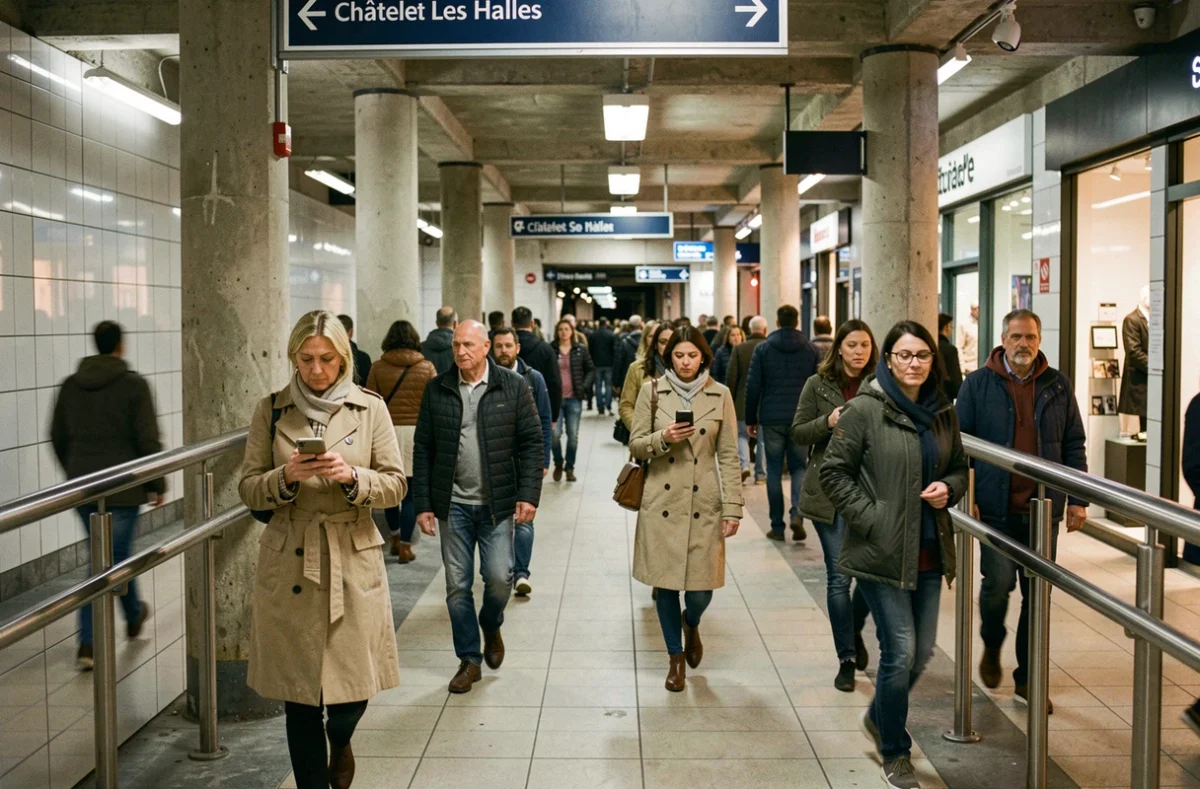
Châtelet Les Halles sees a daily flow of travelers comparable to that of certain national train stations. This interchange hub between RER and metro, combined with a shopping center and a revamped public space, generates very contrasting perceptions depending on the time, the route taken, and the level of foot traffic. The challenge for anyone considering settling there, booking a hotel, or simply transiting regularly is less about overall danger and more about a nuanced understanding of specific situations.
Underground architecture and pickpocketing: the real risk at Châtelet Les Halles
Field reports converge on one point: opportunistic theft is the dominant risk, not physical assault. The long corridors of the interchange, the changes in elevation, and the escalators create areas where travelers stop, check their phones, or handle their luggage. These moments of inattention are precisely what pickpockets exploit.
The configuration of the transport hub plays a direct role. The underground network of Châtelet Les Halles connects several metro and RER lines, creating a funnel effect during peak hours. Disorientation is common, even for Parisians. A lost traveler slowing down in a crowded corridor becomes an easy target.
Several behaviors significantly reduce exposure to theft:
- Keep your phone in an inner pocket during transfers, rather than in hand while walking to check a route
- Opt for a closed bag worn in front of you in high-density areas, especially on the RER platforms
- Avoid stopping in corridors to consult a map: position yourself with your back to the wall or wait until you are on the platform
This observation nuances alarmist accounts that describe an uniformly dangerous neighborhood. The risk is localized, predictable, and largely related to the architecture of the places.
To gather a view on Châtelet Les Halles that goes beyond mere feelings, it is necessary to distinguish between what pertains to delinquency and what relates to the structural discomfort of a saturated transport hub.
Perceived safety and real safety: what the patrols don’t say
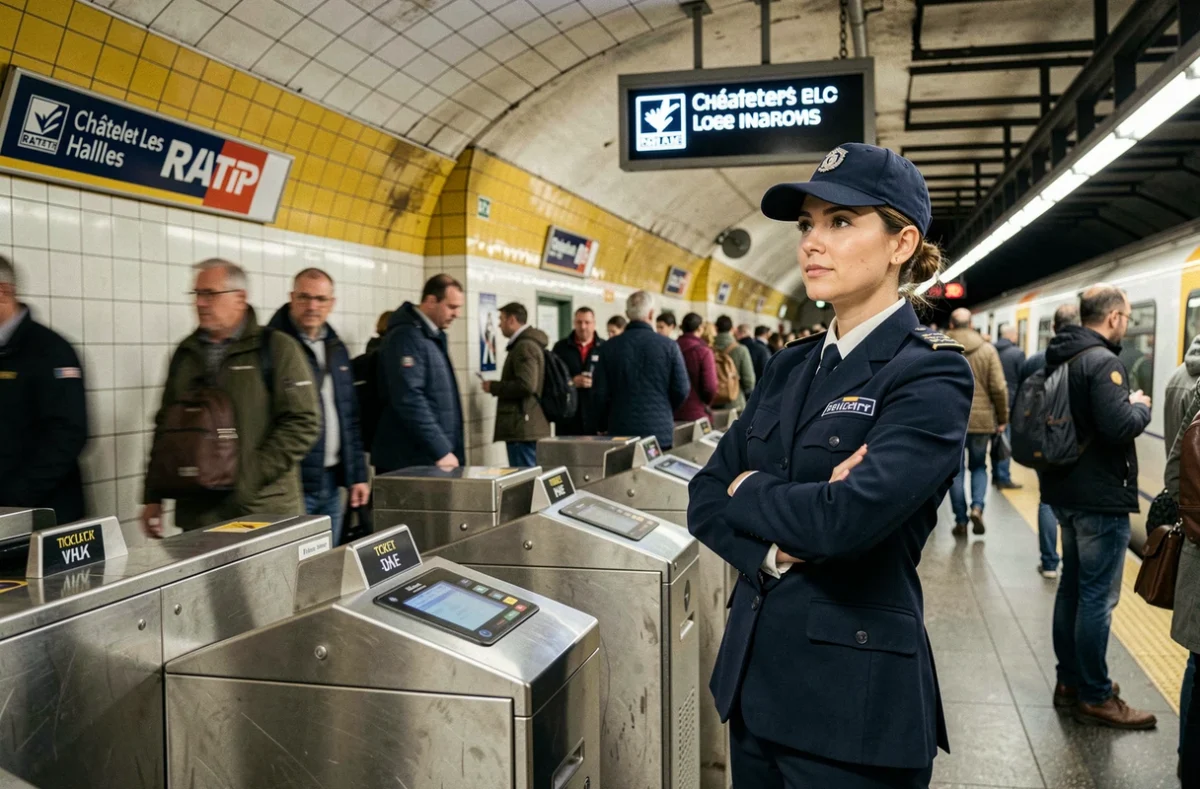
The visible police presence around Châtelet Les Halles is often cited as evidence of local insecurity. This reading is misleading. The patrols reflect the level of national vigilance, not a local increase in assaults. In transport hubs and tourist sites in Paris, checks have become the norm as part of the Vigipirate plan.
Seeing armed officers in an underground station does not carry the same meaning as a police deployment in response to an incident. The two situations blur in the perception of passersby, which fuels a sense of insecurity disproportionate to the facts.
The available data does not allow for a conclusion of specific degradation of Châtelet Les Halles compared to other major Parisian hubs. However, the volume of foot traffic makes each incident more visible and more discussed on forums and social media.
Atmosphere of the Châtelet Les Halles neighborhood according to the time
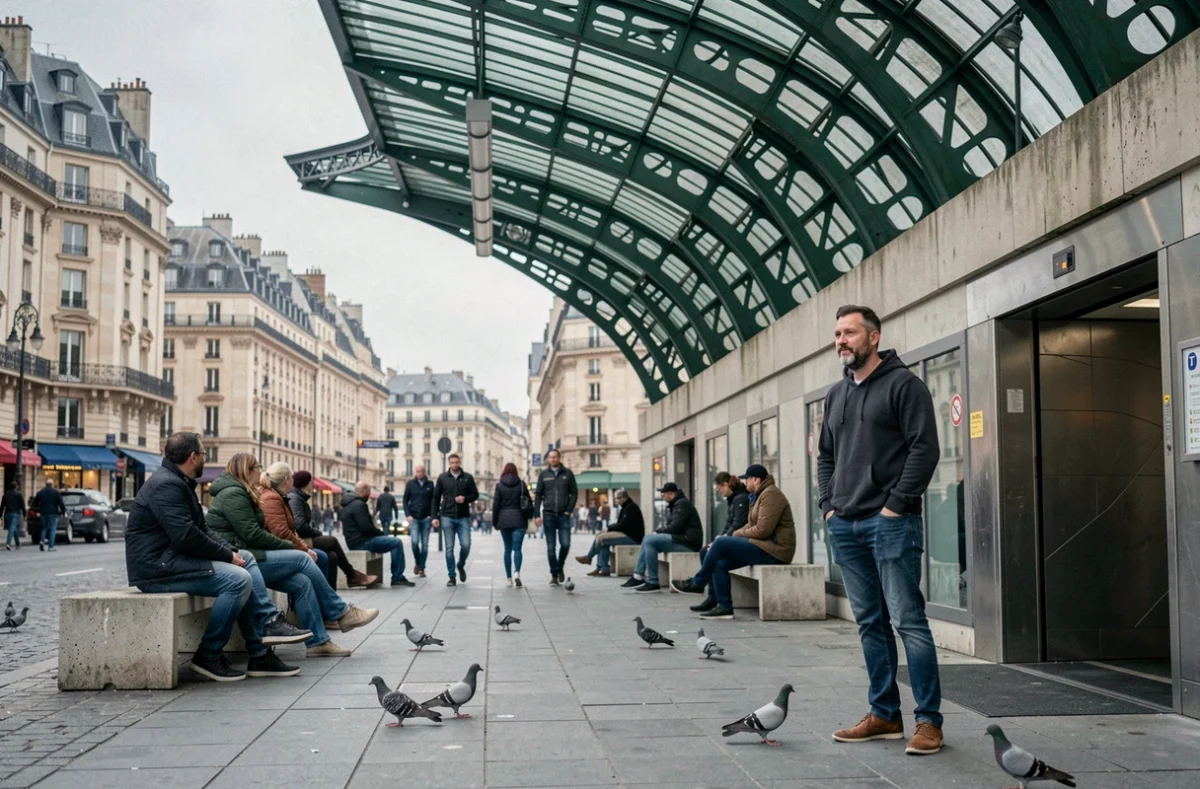
The atmosphere varies greatly depending on the time and function of the place. During the day, the Nelson Mandela garden and the areas around the Canopée welcome families, tourists, and employees on break. The terraces of the adjacent pedestrian streets operate normally.
The shift occurs in the evening, starting with the closure of the shopping center. The public spaces empty of their commercial and family visitors. The groups that remain are more homogeneous, and the lighting in the transition areas between surface and underground creates uninviting pockets of shadow.
At night, a neighborhood that changes its face
After 10 PM, the immediate surroundings of the RER station and the accesses to the underground forum concentrate tense situations. Field reports diverge on this point: some residents describe a clear degradation in recent years, while others downplay it by comparing it to the 1990s.
The determining factor is the route taken. The Rue de Rivoli or Rue Rambuteau remain lively and well-lit late into the evening. The interior passages of the forum and the secondary accesses to the RER present a completely different face after the shops close.
Disruptions and exceptional events: an underestimated factor
Safety at Châtelet Les Halles is not limited to the risk of delinquency. The accessibility of the neighborhood can be significantly disrupted during exceptional events: large gatherings, official visits, demonstrations. Access controls, imposed detours, and the temporary closure of certain connections transform a usual journey into an unpredictable route.
For a traveler who has booked a hotel or an apartment nearby, these disruptions deserve to be anticipated. Accommodation located two metro stations from the center, with direct access via a less congested line, can offer a better comfort-location ratio than an address at the foot of the Canopée.
Central neighborhood does not mean most convenient neighborhood
The reflex to book as close as possible to the transport hub is based on the idea that centrality guarantees fluidity. At Châtelet Les Halles, it is often the opposite. The saturation of connections extends actual travel times far beyond what the metro map suggests. A hotel in the Marais or near Étienne Marcel offers the same geographical proximity with a more pleasant environment in the evening.
The Châtelet Les Halles neighborhood is neither the no-go zone described on some forums nor the peaceful city center that the Canopée suggests in the middle of the afternoon. Its daily reality depends on the time, the chosen route, and the ability to read the urban space for what it is: a very high-density transit hub, with the frictions that this implies.