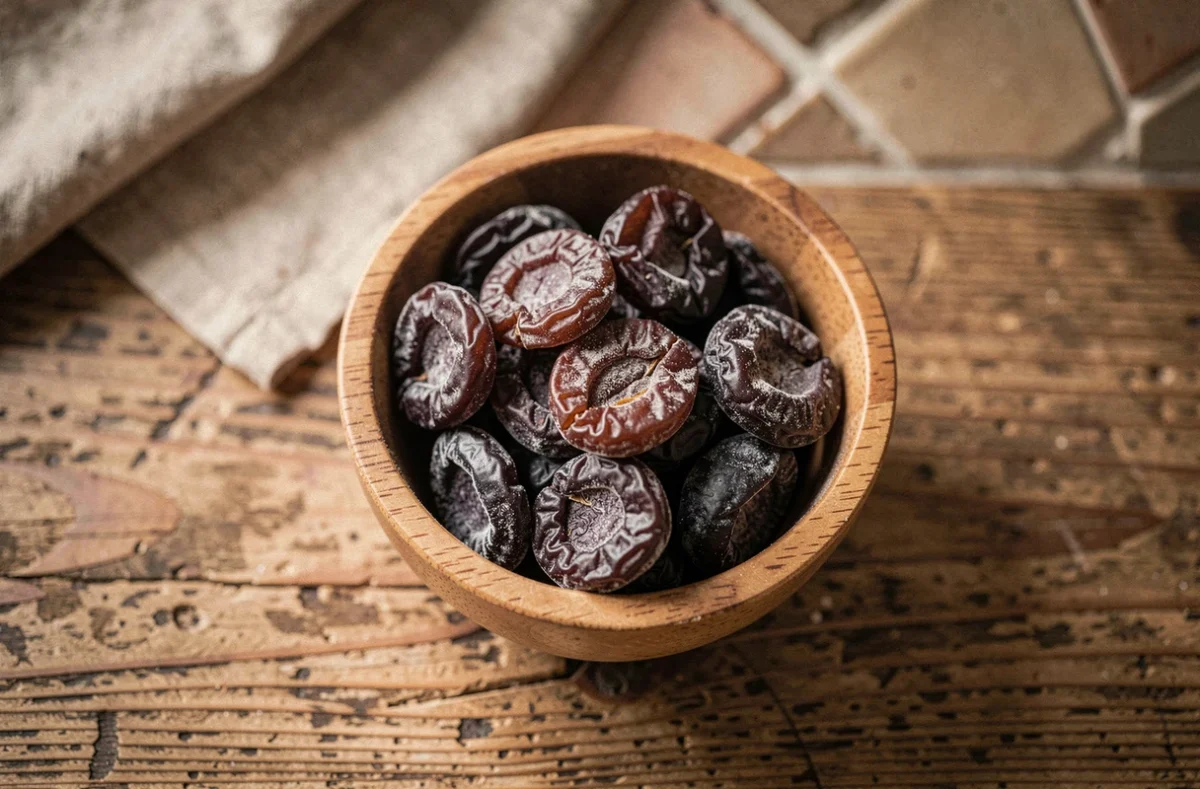
A bag of prunes is found at the back of the cupboard, the printed date is several months old. The package is not swollen, the fruits seem normal. The temptation is strong to use them in a cake or to snack on them as they are. Before deciding, we need to take a closer look at what this date really means and what our senses can (or cannot) detect.
DDM or DLC on prunes: what the printed date really indicates
The confusion between the two types of food dates is at the heart of the problem. On a package of dried prunes, the usual mention is “best before,” which corresponds to a minimum durability date (DDM). This DDM is not a consumption deadline (DLC).
The difference is concrete: a DLC (“consume by”) concerns perishable products like fresh meat or dairy products. Exceeding a DLC poses a real health risk. The DDM, on the other hand, indicates that the manufacturer guarantees the organoleptic qualities of the product (taste, texture, aroma) until that date. Beyond that, the prune may lose flavor or softness without being dangerous.
Before wondering if we can consume expired prunes, we should check the exact wording on the packaging. If we read “best before,” we are facing a DDM, and exceeding it is not as serious as for a fresh product under DLC.

Expired prunes: concrete signs of degradation to check
Knowing that the DDM is not a DLC does not exempt us from careful examination. The absence of visible mold is not enough to guarantee safety. We must engage several senses before deciding.
What to observe and what to smell
- A swollen package indicates internal fermentation. Even if the prunes seem intact, we should discard the bag without hesitation.
- A fermented, sour, or rancid smell upon opening indicates chemical or microbial degradation. This smell can appear even without visible mold.
- An abnormally moist or sticky texture, especially on prunes that are supposed to be dry, suggests a reabsorption of moisture conducive to the development of microorganisms.
- The presence of small insects, larvae, or silky threads (food moths) renders the product unfit for consumption.
What the senses do not detect
Some contaminations remain invisible and odorless. Reports vary on this point, but a rule of common sense applies: if the bag has been opened for a long time or stored in a warm and humid environment, the printed date no longer reflects the reality of the product. A prune that has remained in a cool, dry cupboard, in a closed bag, behaves very differently from a prune from an opened bag left near a heat source.
Storage conditions for prunes after opening
This is the factor that most guides overlook, yet it weighs as much, if not more, than the date itself. Storage after opening determines the actual shelf life of the prune, well beyond what the label promises.
A bag that has been opened and resealed with a simple rubber band in a cupboard above the oven (a warm and sometimes humid area) deteriorates much faster than an intact bag stored in a cool place. The reduced water content of dried fruits naturally protects them from bacteria, but this protection disappears as soon as the ambient humidity rises.
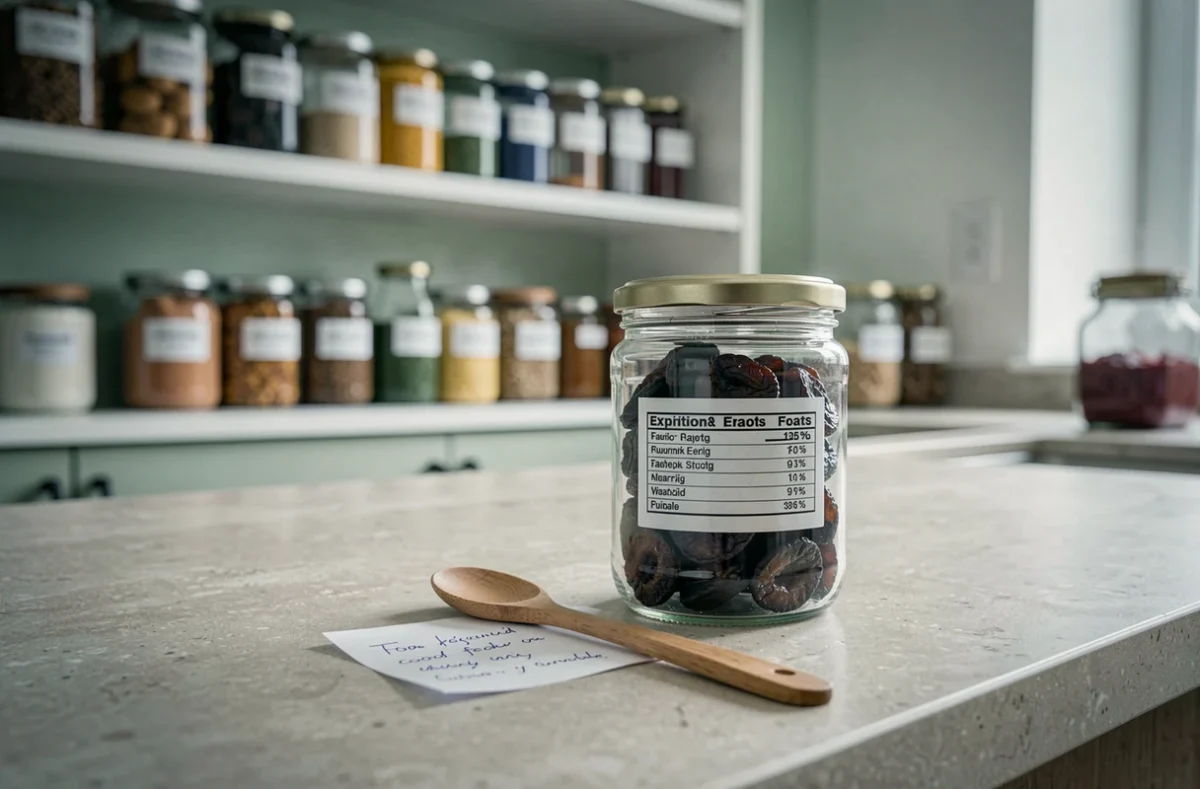
In practice, we transfer opened prunes into an airtight jar or a resealable bag, stored in a dry cupboard, away from light. If we live in a humid area or if the kitchen is poorly ventilated, the refrigerator remains the safest option for preserving prunes beyond a few weeks after opening.
Expired prunes: use them rather than throw them away
When prunes have exceeded their DDM but pass all visual and olfactory checks, we can consume them without throwing them away unnecessarily. The hardened texture is the main defect observed, but it can be easily corrected.
Rehydrating dried prunes in warm water or tea for about twenty minutes restores their softness. They can also be directly incorporated into a cooked preparation (compote, tagine, far breton) where the heat and liquid compensate for the loss of flexibility.
However, if the taste is distinctly altered after rehydration (bitterness, unusual acidity), we should not force it. A prune that has lost its normal flavor profile has undergone degradation that goes beyond simple drying.
Food waste and prunes: a reflex to adjust
Throwing away dried prunes solely because the DDM is exceeded by a few weeks contributes to food waste without any real health benefit. Dried fruits are among the most durable foods in the pantry, precisely because their low water content inhibits bacterial growth.
The real risk does not come from the calendar but from the break in the preservation chain: a torn bag, prolonged exposure to moisture, contamination by pests. Rather than monitoring the date, it is better to monitor the condition of the container and the storage conditions.
A well-sealed bag of prunes, stored dry and at a stable temperature, retains its qualities well beyond the DDM. Conversely, a bag opened for months in a humid cupboard deserves to be thrown away even if the date has not yet been reached. The date guides, the conditions decide.