The combination locks sold by Decathlon equip a large number of urban bikes in France. However, their default code (often 0000) remains unchanged for many users, which reduces their effectiveness to almost nothing. Changing this combination takes less than two minutes, but the procedure varies depending on the internal mechanism of the model. Beyond the technical gesture, the choice of code and the type of lock used have direct implications on insurance coverage in case of theft.
Wheel Locking Mechanism: What Happens Inside the Lock
Most Decathlon combination locks use a system of wheels aligned on a central axis. Each wheel has an internal notch. When all the notches are aligned to the correct combination, the locking axis retracts and releases the cable or shackle.
The reset button or lever, depending on the model, temporarily disengages this axis to allow the repositioning of the wheels. It is this mechanism that makes changing the code possible without tools.
The fragility lies in the mechanical tolerance between the wheels. On entry-level models (thin cables with 4 digits), a slight play sometimes allows one to feel the notch by touch when pulling on the cable, wheel by wheel. The tutorials circulating online to retrieve a forgotten code exploit precisely this weakness. Regularly changing the combination does not correct this structural flaw but complicates the task for an opportunist who might have observed the manipulation.
A complete guide detailing the procedure for each range is available on the dedicated page for the Decathlon bike lock on 1001 Sports, with specifics by the number of wheels.
Code Change Procedure According to the Type of Decathlon Lock
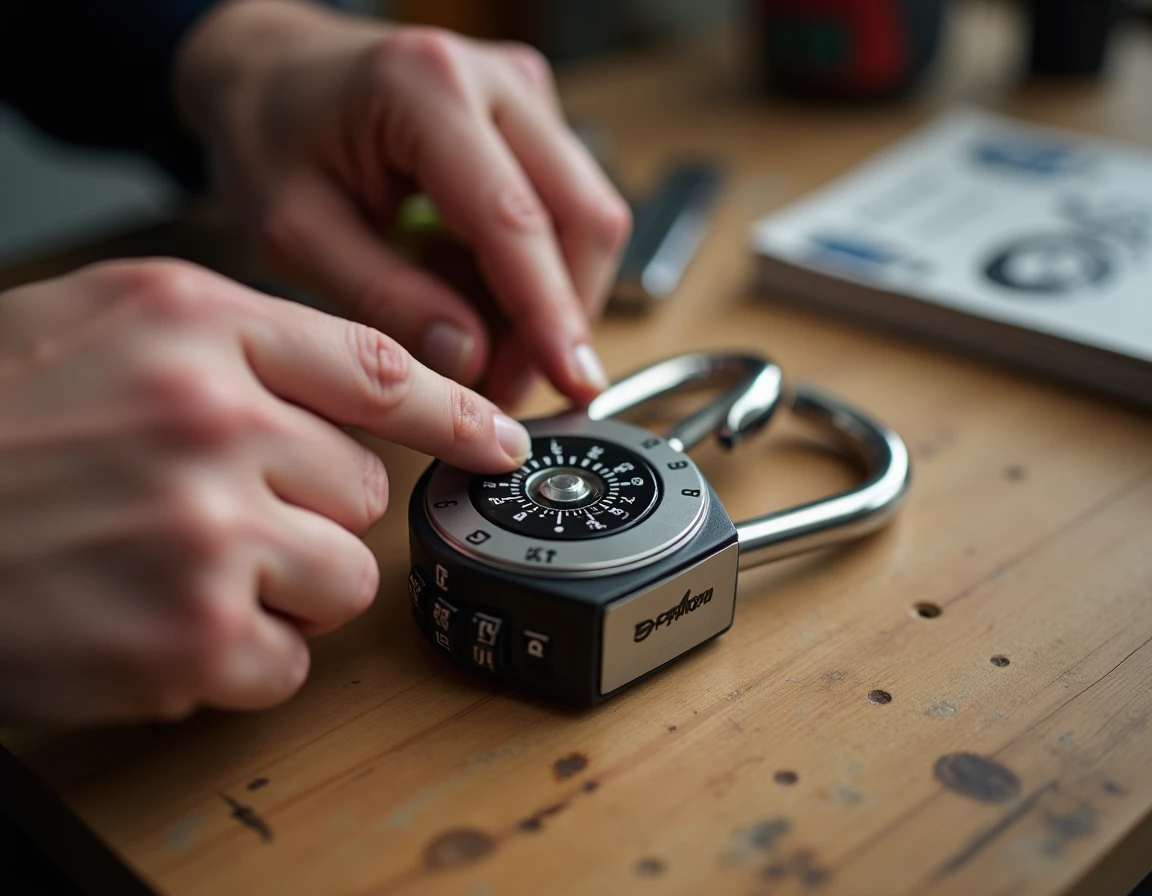
Two main families coexist in the Decathlon range: coded cables (type 500 or 120) and folding or U-locks with combinations. The reset logic differs.
Coded Cables and Chains (4 or 5 Wheels)
- Open the lock by positioning the current code (default factory code: 0000 or 00000 depending on the model)
- Locate the reset lever or button, usually located next to the cable insertion hole, and push or turn it to the indicated position
- Compose the new combination by aligning the wheels to the chosen numbers, then release the lever to lock the new code
- Test several times the opening and closing with the new code before using it in real conditions
Combination Locks with Shackle or Folding
Some newer models incorporate a reset mechanism accessible only when the lock is in the open position. A pen or a thin tool may be needed to press a small recessed reset button. The instructions provided with the product remain the reference, as the position of the reset button varies from model to model.
If the manual has been lost, the Decathlon customer service website offers product sheets by reference, with adjustment instructions for each lock.
Choosing a Bike Lock Code That Is Hard to Guess
Changing the combination is only worthwhile if the new code offers minimal resistance. The most tested sequences by thieves are predictable.
- Avoid logical sequences (1234, 0000, 9876) and repetitions (1111, 2222)
- Avoid obvious birth dates or years (1990, 2000)
- Prefer a combination without identifiable personal links, mixing non-consecutive numbers
- Note the code in a safe place (password app, notebook at home), never on a sticker attached to the bike or in the saddlebag
A random 5-digit code slows down more than a 4-digit code, simply because the number of possible combinations increases from 10,000 to 100,000. If your lock allows it, the 5 wheels are worth considering.
Theft Certification and Bike Insurance: A Contractual Link to Verify
Changing the code enhances daily security but does not alter the certification level of the lock. Yet, it is this certification that matters to insurers.
Several recent bike contracts require a certified ART2 or Bicytrust lock to accept compensation in case of theft. Some even require the presentation of both keys provided with a keyed lock to process the claim. Entry-level combination locks, even with a personalized code, generally do not carry these labels.
For example, Decathlon sells a plug-in chain 900 labeled ART2, presented as meeting insurers’ requirements. For a valuable bike or one on lease, a code lock without certification is not enough to guarantee coverage for the incident, regardless of the code chosen.
Bike Marking and Complementarity with the Lock
Since 2021 in France, every bike sold by a professional must be marked with a unique identifier registered in the FNUCI (National Unique File of Identified Cycles). This marking facilitates recovery in case of a recovered theft, but it does not replace the physical lock. The two devices work together: the marking deters resale, while the lock delays or prevents the theft itself.
Checking the conditions of your insurance before settling for a simple code lock remains the most protective approach. The type of lock required is listed in the specific conditions of the contract, not in the commercial brochures. A call to the insurer can clarify any ambiguity regarding the expected certification level.