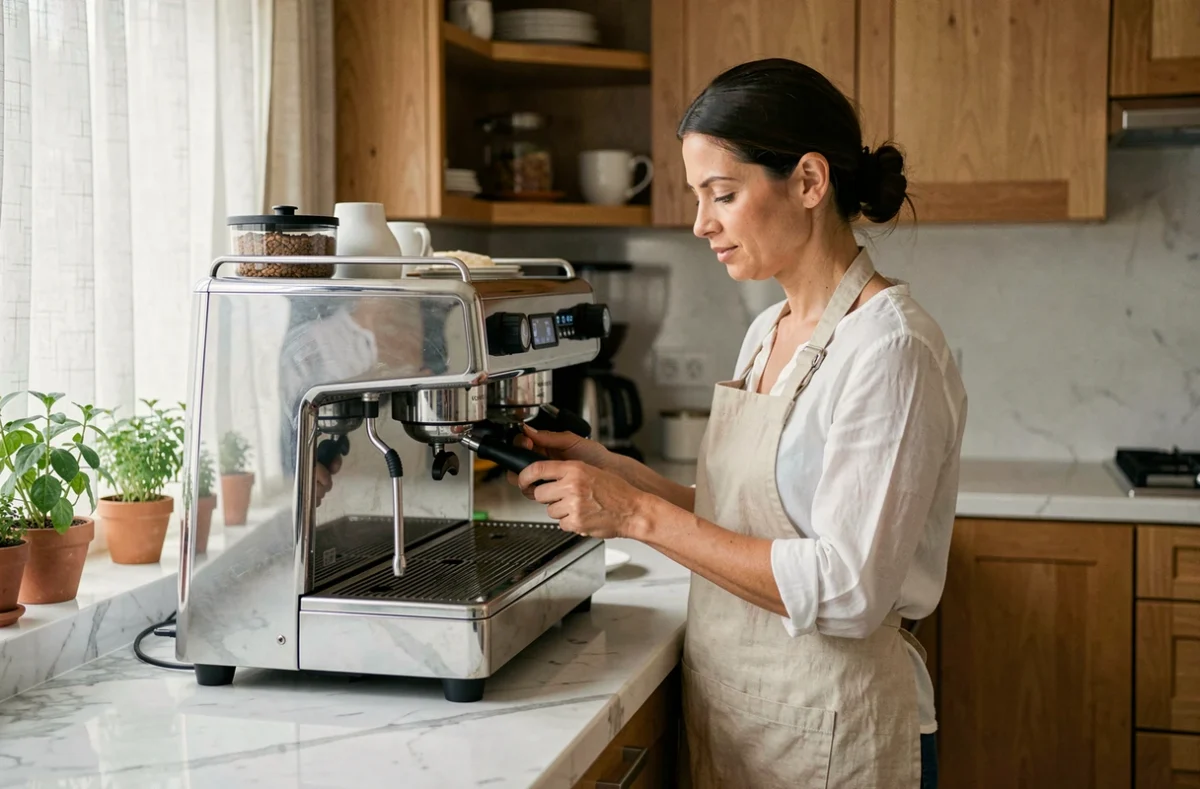
Before comparing brands or designs, the choice of an espresso machine comes down to a simple decision: how much effort are you willing to put in each morning to get your cup? The answer points to very different technologies, with usage costs that the purchase price alone does not reveal. Here are some concrete guidelines to choose an espresso machine suited to your daily life.
Repairability and maintenance costs of a coffee machine: the criterion that no one looks at in-store
Have you ever compared two machines with similar prices in-store? The real difference comes after the purchase. A typical repair intervention on a coffee machine costs an average of 83 euros, including 68 euros for labor and only 15 euros for parts. In other words, even a model designed to be repairable can be expensive to maintain out of warranty.
The European regulation on durable products, adopted in 2024, plans to extend repairability assessments to coffee machines. Access to spare parts, technical documentation, and the difficulty of disassembly will be taken into account. In France, since the decree of April 5, 2024, consumers already have a repairability index displayed on certain devices.
A good repairability score does not guarantee an affordable repair. The regulation imposes a “reasonable” price for parts and services, but there is no set price ceiling. Before buying, check three elements: the average labor rate of the authorized network, the actual availability of parts, and the manufacturer’s warranty duration. Specialized guides like machineaexpresso.fr allow you to cross-reference this data for different models.
Integrated grinder or capsules: which extraction system for which profile
The choice of extraction system determines the quality in the cup, the cost per coffee, and the preparation time. Two main families dominate the domestic market, each with its own logic.
Bean-to-cup coffee machine with grinder
The grinder grinds the coffee just before extraction. The bean retains its aromas until the last moment, producing a more complex espresso in the mouth. The downside: maintenance is more demanding. You need to regularly clean the extraction group, descale the water circuit, and empty the grounds container.
The grinder requires weekly maintenance to preserve the quality of the coffee. If you neglect cleaning the grinding chamber, the rancid oils from the coffee accumulate and affect each subsequent cup. Machines with grinders are suitable for households that consume several coffees a day and accept this routine.
Capsule machine
Capsules offer perfect repeatability: each dose is calibrated in weight and granularity. Preparation takes less than a minute, and cleaning is limited to the drip tray. However, the unit cost per cup is significantly higher than with whole bean coffee.
Why does this choice remain relevant for some profiles? If you drink one or two coffees a day and simplicity is a priority, a capsule machine costs less to purchase and requires almost no maintenance. The trade-off is on the variety of available coffees and the environmental impact of the pods.
Pressure, heating, and steam wand: the technical parameters that change the cup
Product sheets display impressive pressure figures (often 15 or 20 bars), but the actual pressure at the level of the ground coffee is much lower. What matters is the consistency of this pressure during extraction and the stability of the water temperature.
- Thermoblock or single boiler: the thermoblock heats water on demand, reducing preheating time. A single boiler maintains a constant temperature water volume, offering more stability for successive extractions.
- Steam wand: if you prepare cappuccinos or lattes, the presence of an adjustable steam wand changes the game. Automatic panel wands (like “Pannarello”) produce decent but less textured milk foam. A manual steam wand requires learning but allows you to create creamy microfoam.
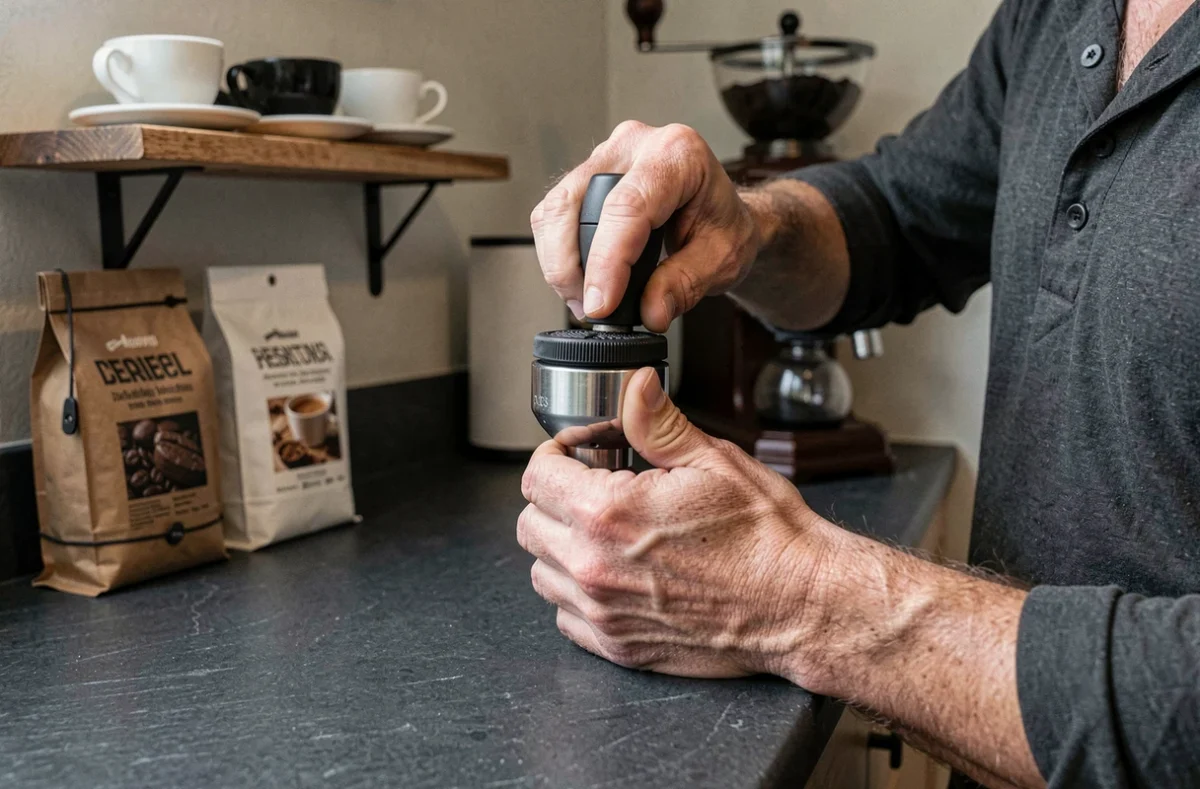
- Pressurized or non-pressurized portafilter: a pressurized filter forgives grinding and tamping mistakes. A non-pressurized filter requires a precise grinder and mastered tamping technique but releases the full aromatic potential of the bean.
For a first purchase, a pressurized portafilter combined with a thermoblock is a good starting point. You will achieve a decent espresso without investing in a dedicated grinder.
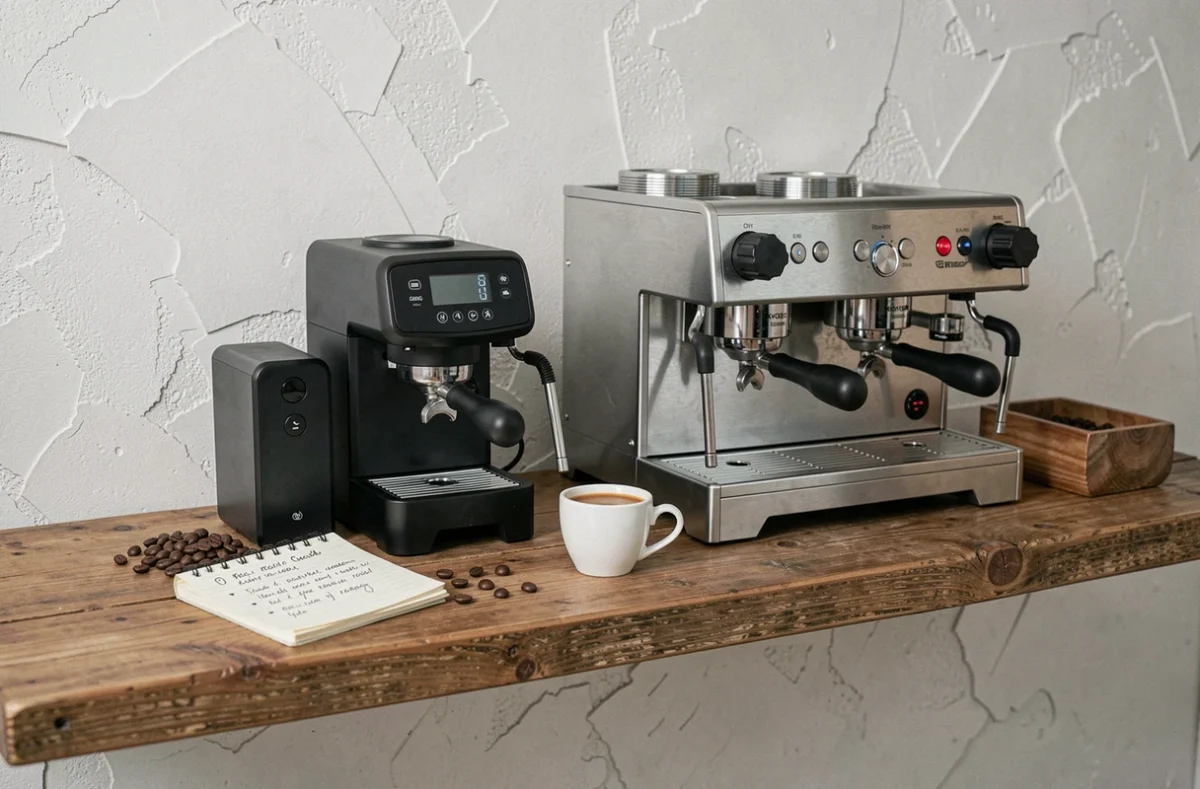
Total budget for an espresso machine: calculating the true cost over three years
The purchase price represents only a fraction of the actual budget. The profitability depends on the cost per cup, the frequency of maintenance, and the potential replacement of wear parts.
- Whole bean coffee: the cost per cup is the lowest, especially if you buy in one-kilogram bags. The beans can be stored for a few weeks in an airtight container.
- Compatible or branded capsules: the price varies from one to three times depending on the brand. Compatible capsules offer a compromise, but check their actual compatibility with your machine.
- Descaling and water filters: a descaling kit is inexpensive, but it needs to be used regularly depending on your water hardness. Built-in water filters reduce limescale and space out descaling.
- Wear parts: portafilter seals, shower screens, grinder burrs. Their replacement is normal after a few years of intensive use.
Over three years, a bean-to-cup machine often turns out to be cheaper than a capsule machine, provided you consume at least two coffees a day. Below that, the purchase price difference is too significant to be compensated.
The choice of an espresso machine boils down to three considerations: the time devoted to preparation, the projected budget over several years, and your tolerance for regular maintenance. A model with an integrated grinder and manual steam wand offers the best room for improvement, while a capsule machine remains the rational choice for occasional consumption.
Check the availability of spare parts before purchasing: this detail separates a machine that lasts from a disposable one.