
Seasoned and embossed animal proteins have been the subject of technical debates for centuries. Despite an abundance of recipes, inadequate cooking remains common, resulting in a loss of juices or a rubbery texture. The tradition of drying and smoking, long favored for preservation, has given way to fresh variants whose preparation requires special attention.
Each type of sausage, including the merguez, imposes specific requirements based on the composition of its filling and the casing used. Temperature variations, the choice of fat, or the order of handling directly influence the result. Some lesser-known methods improve texture and preserve aromas.
Merguez and other sausages: origins, ingredients, and secrets of production
It is impossible to confuse merguez with another sausage. Born in the Northeast of Constantine before crossing the Mediterranean with the Pieds-Noirs, it has carved out a unique place in the galaxy of sausages. Its glowing red hue, its spiciness, and its generous use of spices have become its signature. Behind the apparent simplicity, the recipe demands an expert hand: beef and lamb meat, seasoned with paprika, cumin, and chili, and wrapped in natural casing. This casing does not merely contain the filling: it seals in the aromas and protects the texture, a prerequisite for a merguez worthy of the name.
Surrounding it are other sausages that perpetuate ancient practices. The Montbéliard sausage owes its flavor to smoked pork meat from beech wood, round and meaty. The Strasbourg sausage, or knack, combines beef, pork, and veal but is distinguished by its initial cooking and its famous crunch. In Toulouse, long spirals of coarsely minced pork await the embers to reveal their character.
It all starts with the choice of meat. Some artisans, like the Moreau family, focus on local sourcing and subtle spices. In Tarn, Lucien, a butcher by trade, emphasizes the precision of the gesture, the sharpness of the knife, the meticulous measuring, and the attention given to the casing. These details determine the outcome, even in the pan-frying of merguez, a true challenge for purists, who compete with tips to reheat merguez without drying them out.
Charcuterie is not just about sausages. It encompasses hams, pâtés, terrines, rillettes, blood sausages, and cooking sausages, each carrying a terroir, a culture, an identity to defend against industrial uniformity and the impoverishment of taste.
Why pan-frying appeals to merguez lovers
To reheat merguez while preserving their texture and aroma, many turn to pan-frying. The heat of the metal, whether cast iron or stainless steel, quickly sears the skin, locks in the juices, and keeps the meat tender. By setting the heat to medium, cooking proceeds smoothly, without bursting or drying out.
Here, there is no need to add fat. The merguez already contains everything necessary. A well-heated pan and a watchful eye do the rest. Chef Norbert Tarayre, for example, suggests starting cold: the sausages gradually warm up, the casing does not contract abruptly, and the heat reaches the center without aggressing the meat.
In the pan, it’s all about control: 10 to 15 minutes are sufficient, provided you turn them regularly for even cooking and a nice color. Salt is set aside, unnecessary with all these spices and fat already present.
The choice of tools is not trivial. A pair of tongs is preferable to a fork, which would pierce the casing and let the juices escape. Far from being a mere alternative to the barbecue, pan-frying imposes its rigor and efficiency, allowing you to savor the full richness of the product.
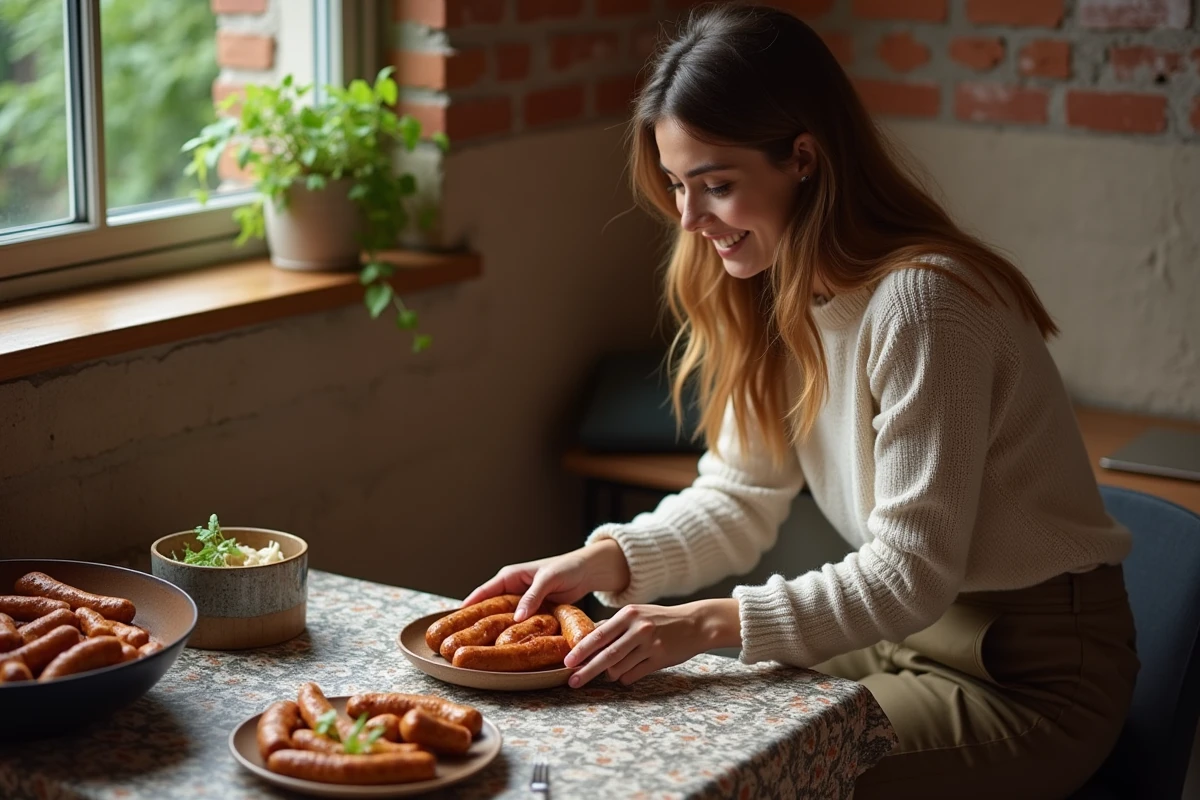
How to reheat and cook your merguez without drying them out: tips and techniques to know
A poorly treated merguez during cooking has little left to offer. To preserve all that makes it strong—juices, creaminess, and spice bouquet—it’s better to rely on moderate heat. A fire that is too hot aggresses the casing, the meat tightens, and the fat runs out of the sausage. To avoid a brutally unbalanced cooking, take them out of the refrigerator ten minutes in advance: the transition will be smoother, and the cooking more evenly distributed.
Never give in to the temptation to pierce the merguez. This classic mistake condemns the sausage to dryness. Prefer tongs, turn them regularly, every two or three minutes, for uniform caramelization and intact skin. Ten to fifteen minutes over medium heat are usually sufficient to achieve ideal cooking without losing tenderness.
Precise gestures, tasty results
Here are some reflexes to adopt for perfect cooking:
- Start cooking cold; the heat will distribute better, and the merguez will remain tender.
- Avoid adding oil: the merguez will release enough fat to cook perfectly.
- Let the sausages rest off the heat for a few minutes before serving: the meat relaxes, the juices set, and the tasting will be all the better.
As for accompaniments, it’s all a matter of taste: sautéed potatoes, crunchy salad, or light couscous always hit the mark. For condiments, harissa, mint yogurt, or mustard depending on the day’s mood. Ultimately, success lies in the attention given to the product, mastery of the heat, and precision of the gestures. The pan, once tamed, reveals the merguez in its best light. It becomes impossible to resist this symphony of flavors or to forget the simple pleasure of a perfectly cooked merguez.